
The Progress Flag is Not a Good Pride Flag
Too many words where I'm rambling out my thoughts on the Progress Pride flag, why it doesn't work as the banner for queer people, and why the 6-striped flag is the GOAT

A good flag stands as a symbol that a group can rally behind, while also broadcasting a sliver of that groups’ history and identity. The U.K.’s Union Jack is a combination of the constituent countries flags, creating a distinct icon for the kingdom to rally behind; The gold stars against the red background of China’s flag immediately calls to attention its communist identity and relation to the (defunct) U.S.S.R.; The color-swapped sideways crosses found across the flags of the “Nordic” countries invokes their shared history and ongoing supra-national relationship. These flags stand out when they’re flown and communicate something to the observers—this is the banner that a group can rally behind.
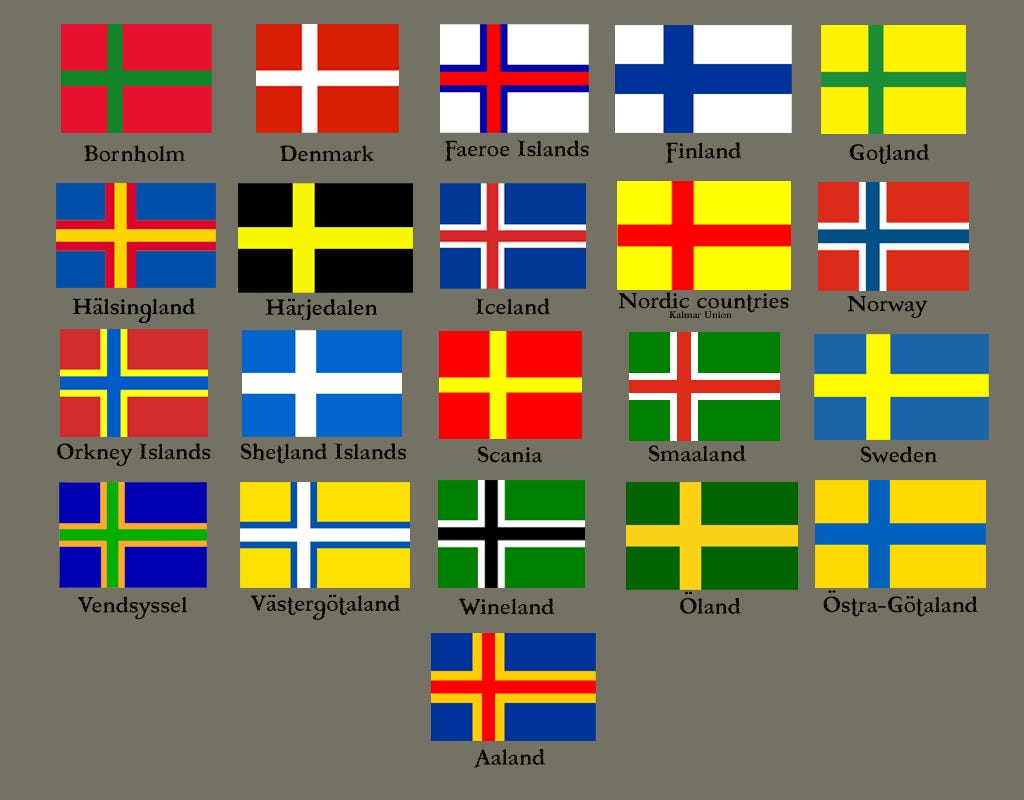
Over the last few years I’ve been captured by the evolution of the Pride flag.
What started as 8 colorful stripes has changed over the years—dropping stripes, shifting colors, adding new symbols and splintering off to better represent specific identities and movements within the community-at-large that’s represented by the Pride flag. The result of this evolution has led to a few commonly used versions of the flag, and that brings me to the purpose of this essay.
Not all flags are created equal. Some tell a better story than others, some act as better representatives, and some look just plain better. For all of these reasons, I will argue in favor of the “classic” Pride flag, that 6-striped rainbow banner that’s been flown around the world, and against what’s known as the “Progress Pride flag”.


Arguments Against the Progress Pride Flag
In my view, there are four main arguments one can pursue to argue against the Progress Pride flag (henceforth, Progress flag). These same arguments can be used in the reverse to argue in favor of the 6-stripe Rainbow Pride flag (henceforth, Pride flag). These can, broadly, be organized as follows: the cultural legibility of said flag, how inclusive the design is, vexillolographical design principles, and the intention behind the design. My arguments will follow the same order.
Cultural Legibility
For years, June has found corporations around the world invoking the rainbow to signal solidarity with LGBTQ individuals and groups; walking through stores like Target will give you a simulacrum of a kaleidoscope while city streets and public parks are decorated with confetti, glitter, chalk and every other craft supply as people express pride in their identity. For many, the association between rainbows and the queer community is strong.
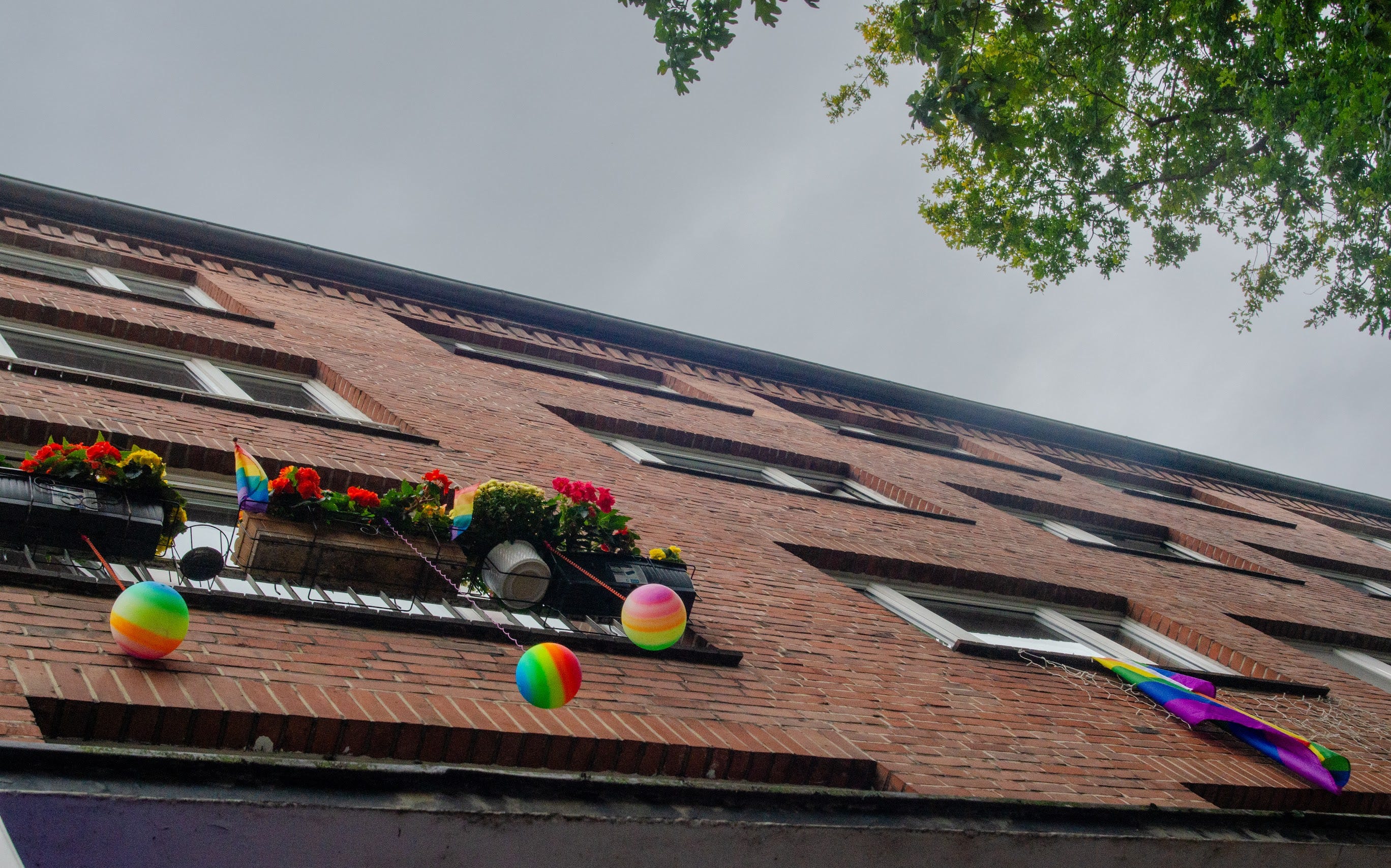
This raises a pressing question: if there’s already have a strong symbol that’s immediately identifiable across broad strokes of society, why give this up?
You might give it up if the symbol stops representing you. But the rainbow is already blind in its acceptance. It doesn’t stand as a banner for just gay men, or just transgender individuals, but rather anyone who identifies as anything besides heterosexual and/or cisgendered. If all can find community under the multicolored banner, who isn’t being included?
Perhaps if another standard can better represent you, change is justified. To this, I’d raise the same rebuttal: what better to represent a diverse community than an already ambiguously inclusive 6-stripe?
The Progress flag just simply doesn’t read as easily or have as much impact as the Pride flag. Part of this is due to the legacy of the Pride flag: it’s been flown for nearly half a century, whereas the Progress flag isn’t yet a decade old. But age isn’t the only factor at play.
Ambiguity results in more inclusion
The straightforward and plain inclusivity of the rainbow banner is, in my view, one of its greatest strengths. Each member of the LGBTQ community that identifies with that community can ascribe their own specific meaning to the flag. The only criteria is that anyone in the queer community is welcome and equal. In this ambiguity, there’s such beauty and strength.
Over the years, the Pride flag has changed in various attempts to bring attention to groups that felt they were being excluded. I worry that these iterations do a better job at alienating than unifying.
Two questions must be asked as each new addition finds its way onto this flag: why did this group need explicit and prominent representation, and what groups are yet to be welcomed under this banner of solidarity? I’ll cover three such modifications in more detail below, but I find myself asking these questions each time I see an updated version of the flag.
If the stripes of racial inclusion were added to challenge the racism that was working its way through these circles, why haven’t we added something to show solidarity with those who come from different religious backgrounds? Are we leaving behind individuals of certain religious or economic backgrounds? What of our peers who feel like Pride it too young—should there be a gray stripe to call out age discrimination?
There’s something to be said about letting each person find their own meaning in a symbol. The flag of the U.S. is loud, busy, and proudly American. It says a lot with it’s 13 stripes and 50 stars, and yet it means something different to everyone living in the country.

For some, it’s the untamed wilderness of Alaska; for others, it’s the sense of endless possibility in cities like New York.
The flag doesn’t need to explicitly tell every single person living in America exactly what it’s supposed to represent. It’s enough to stand as a symbol that all can meet under with their own meanings.
Vexillolographically
The Pride flag, though busy, is much simpler and cleaner, and therefore both more culturally legible and vexillolographically compelling.
Vexillology is the study of flags, and one criteria vexillologists use when evaluating flags is asking a child to quickly draw the flag from memory. It doesn’t have to be perfect, but if it’s recognizable it passes. I imagine most kids can quickly sketch out a rainbow, but I suspect that the success rate for this test quickly drops once you start adding the other elements of the Progress flag. But what is a partially correct Progress flag if not an approximation of the Pride flag?
The Progress flag is aesthetically taxing and attempts to beat you over the head with symbolism. With each new element added, there’s another chapter of a long history which needs to be studied. While it isn’t necessarily a bad thing to have a flag steeped in symbolic meaning, I don’t think these added complexities are justified.
When thinking of how a flag will be seen, you must consider that you’re just as likely to find it on stickers plastering water bottles and laptops as you are to see it flapping in the wind a quarter mile away. What might be a nice conversation piece in a café is illegible on a windy day.
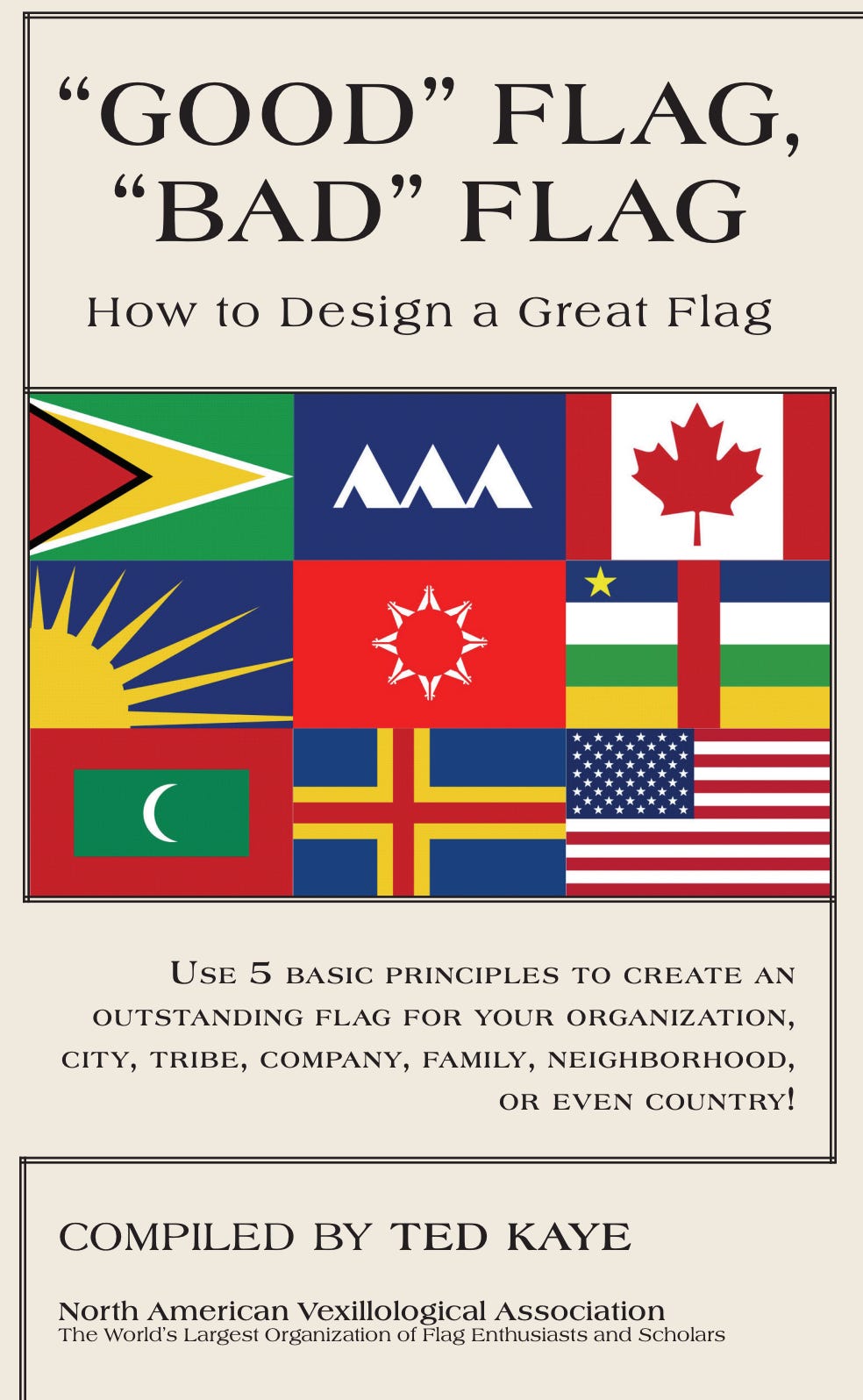
As mentioned, the colorful nature of the Pride flag is chaotic, but I wouldn’t hold this against the design. While this would fail another commonly used marker of good flag design (three colors or less), I argue that the upshot is worth it. The rainbow is iconic and the multi-colored stripes represent that many identities that compose the queer movement.
If we’re judging these flags by their merit as flags, I think the Progress flag fails on all accounts. It adds too many new colors and too much symbolism which dilutes its legibility and cultural cache. Simultaneously, it remains too similar to the Pride flag, while being too multi-layered for a kid to reliably produce from memory.
Confused Intentions
What is Pride? In my mind, it’s a social movement that fights for legal recognition, rights and protections for groups who have sexual or gender identities that fall outside of the cis-hetero norm. In other words, it’s a movement aiming for the equal rights and treatments of anyone who isn’t straight and/or is trans.
Therefore, acting as a symbol for the movement to rally around, the Pride flag seeks to encapsulate this shared social identity. In it’s simplicity, the Pride flag does a masterful job of this: the six-striped rainbow has become iconic amongst the queer community and excels at identifying them to out-groups. It’s clear, simple, and identifiable.
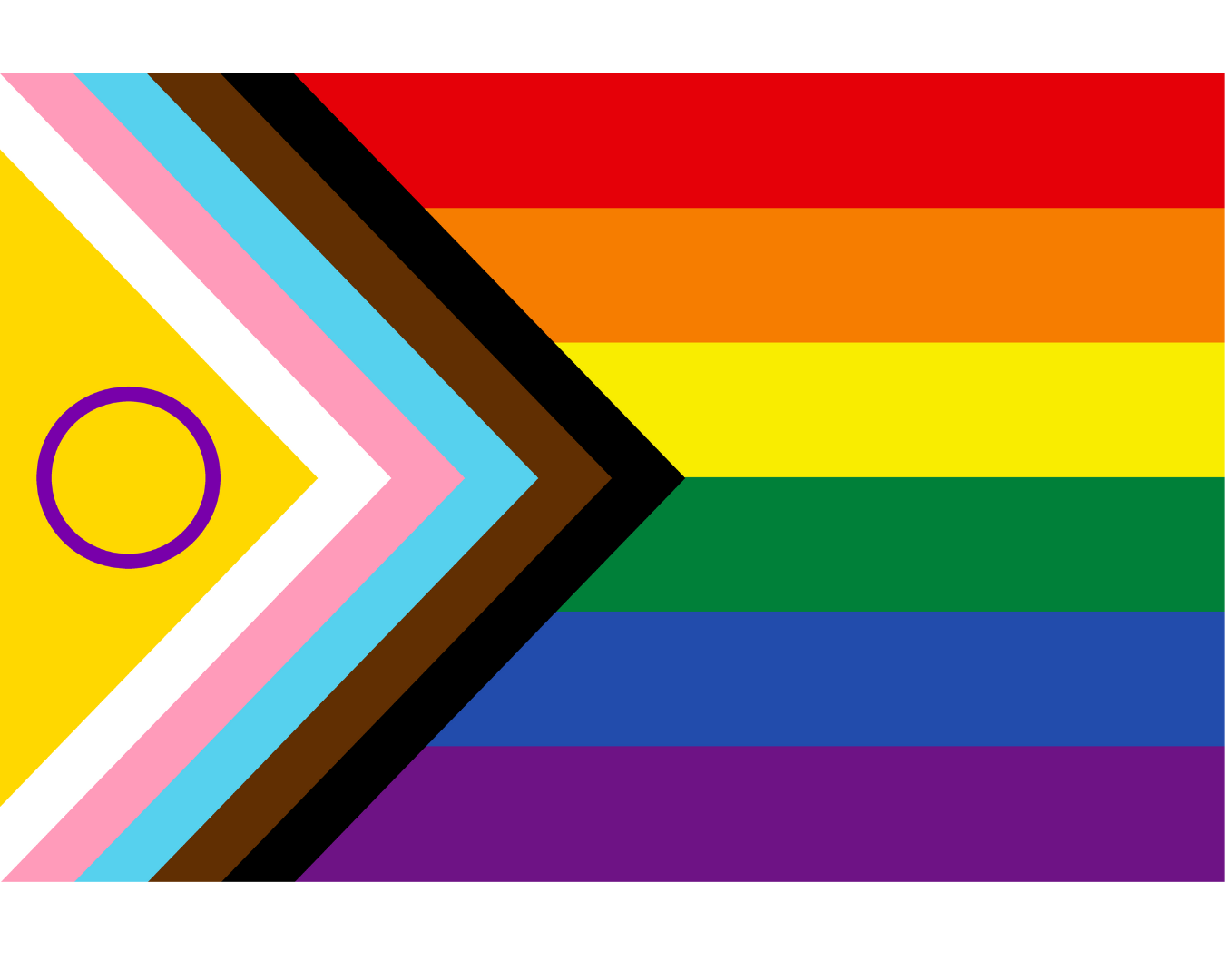
I believe that the Progress flag fails on each of these three points. Its purpose becomes muddy: in trying to represent many groups it becomes excessively complex symbolically as well as aesthetically, and thus it becomes harder to identify with or to discern. This is because of those three elements that were added to the Pride flag: the black and brown stripes, the intersex circle, and the Trans-Triangle.
The Black and Brown Stripes
The black and brown stripes were added in 2018 by artist Daniel Quasar, in an attempt to signal solidarity with queer people of color living in Philadelphia who felt they were being excluded from a white washed LGBTQ scene.
While these are noble intentions and there may be an important discussion to be had regarding racism within the community, I would argue the inclusion of these stripes hurt both movements—those that push for equality for racial minorities and the LGBTQ community.
I worry there’s a problem of “over-inclusion” that’s rampant across many facets of modern life. In an attempt to be accessible to everyone, meaning can be diluted. It’s okay for a group to stand behind one identity, to rally behind one common goal and regard it as sacrosanct. To have a clear purpose can be uniting internally, as well as legible to outsiders.
And while the queer community has many purposes outside of simply broadcasting their existence to the wider world, I find this aspect important. By weaving racial threads into the flag, I worry that the Pride flag becomes less potent. To stand in front of the rainbow banner and demand recognition and respect for all members of the LGBTQ community is clear ask; to try and tie in the explicit reference to race confuses this.
If I imagine someone canvassing for LGBTQ rights under the law, I see the Pride flag as conveying a simple and effective message: “The rainbow represents the queer community, and we’re fighting for the right to legally marry”. If I imagine the same scenario, it’s harder to pitch the Progress flag: “I’m here canvassing for the right for anyone to marry under the law. The rainbow represents the LGBTQ community, which doesn’t currently have that right. The black and brown stripes are there to show that this movement is welcoming to people of all races. Why does that need to be called out? Well…”
The Intersex Circle
Can a movement attempt to be so inclusive that it starts causing harm?
The intersex circle infringes on the intersex identity. To be intersex does not mean to be queer, and by attempting to rope them in to this larger group you can downplay their unique struggles.
To be intersex means to be born with chromosomes and/or sex organs that don’t align with the gender binary: someone born with both a penis and vagina may be labeled as intersex at birth. Sometimes these people undergo surgery or hormonal therapies at a young age to try and better conform to the male or female sex, sometimes these things never present in an obvious way and so an individual may never know they’re intersex. But others carry this identity and its unique struggles with them through their lives.
Having researched intersexuality in preparation for writing this, it seems that there’s a schism within that group. Some might feel solidarity with the queer community because they themselves don’t identify as heterosexual. Others because they find comfort in a movement that challenges the orthodox understanding of sexuality and gender. But others still don’t feel that they belong, and in fact believe that trying to lump these disparate identities together harms their fight for recognition of their unique set of circumstances.
According to Gallup, roughly 9% of Americans identify with the LGBTQ label, nearly 1-in-10 people. Experts estimate that approximately 0.5-1.7% of people in the U.S. possess some intersex traits.
While 1% of people is significant, it’s still an order of magnitude smaller than the LGBTQ community. I fear that by adding their symbol to the Progress flag, it risks overshadowing this group and what they’re fighting for.
Intersexuality is a medical description for a range of conditions anyone can be born with. To lump them in with a movement fighting for equality for sexual and gender identities seems to confuse what it means to be intersex. Someone can be intersex and identify with the LGBTQ community on a personal level, but they shouldn’t automatically be lumped in.
The Trans-Triangle
The Trans-Triangle is the only part of the Progress flag worth keeping.
Not all variations of the Progress flag are equally bad. In fact, I’m quite willing to make concessions to the Trans-Triangle. I believe that this tricolored element offers a unique sense of unity to the LGBTQ community; if this flag is meant to represent those outside of traditional sexuality OR gender norms, doesn’t it make sense to give both of these aspects a place on the flag?
I stand by all of the arguments I’ve made above, that the nonspecific Rainbow Pride flag encourages solidarity and community in its ambiguity. But I’m also sympathetic to the argument that the flag was, originally, a gay pride flag that had its meaning evolve over time. As days go by and meanings change, maybe its okay to signal that this community stands for all types of expression.
Time marches ever forward, and with it comes the wheel of progress. We may like the direction we’re going, we may not, but there’s no doubt that change is coming. Over my life I’ve seen massive change in and around the queer community: from the Obama administration legalizing homosexual marriage in the United States to the ever evolving discourse regarding nuanced terms of self identification. For the LGBTQ, progress is a key part of the identity. In my view, this further gives merit to the inclusion of the Trans-Triangle: when the flag is flying high, this triangle points away from the flagpole and towards the future.
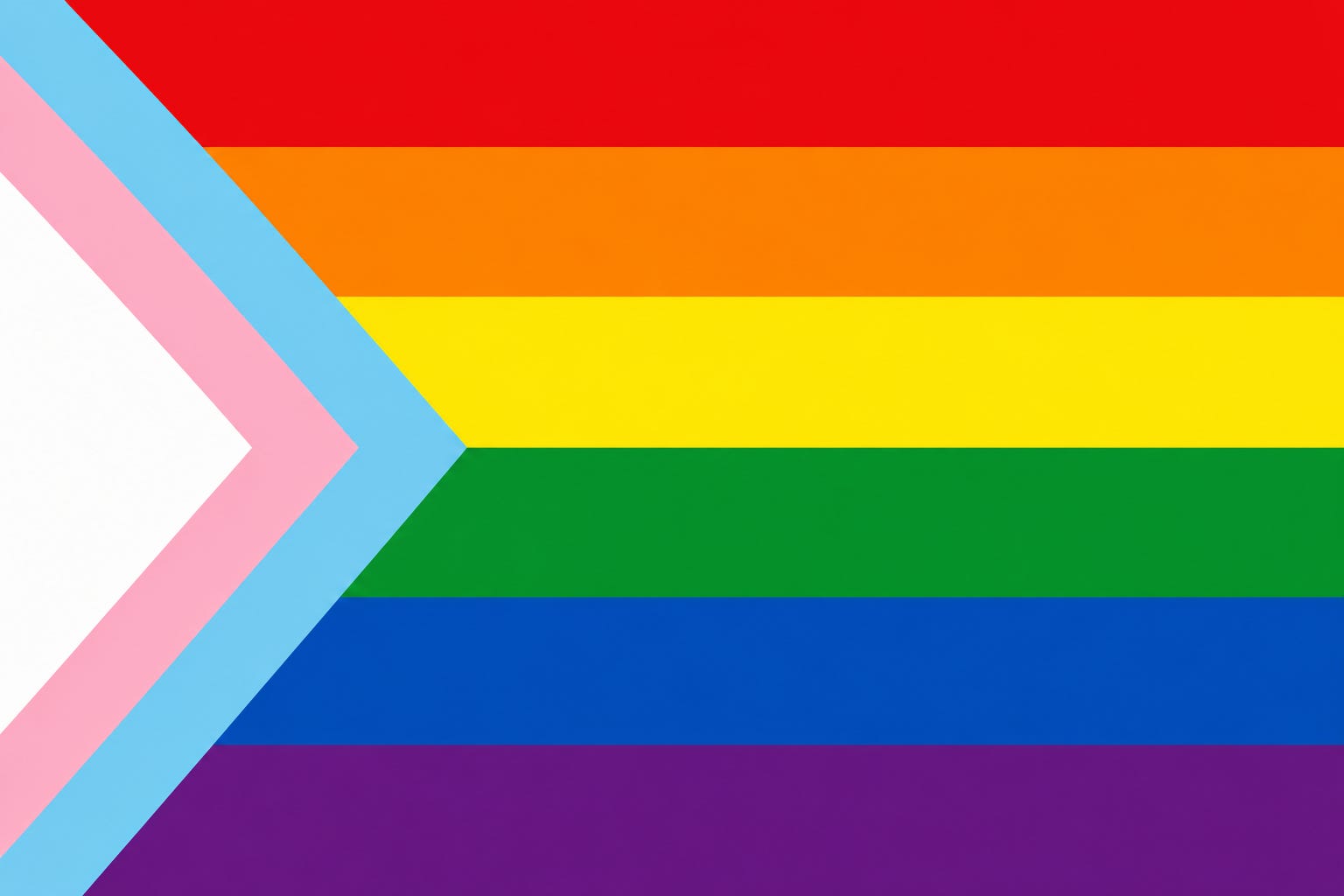
Seeing this version of the Pride flag fluttering flamboyantly in the wind, something about it just seems right. The triangle adds weight and a pleasant asymmetry when its flown horizontally, and seeing the flag vertically reminds me of a medieval banner or a hero’s cape. The apex of the triangle centers cleanly, dividing the 6-stripe into two even sides. It all just looks right to my eye.
In Favor of the Progress Pride Flag
I once had a discussion with a flatmate about his thoughts on the Progress flag. Having thought about this issue for a while on my own, it was nice getting his perspective. He challenged me and gave me new perspectives to consider.
One of the most convincing arguments I’ve heard for the Progress flag came from him. He said that the mere fact that the flag does update to reflect new ideas and identities within the queer community is itself a powerful message.
There’s a lot of strength in a lasting symbol, in an icon that people have found solidarity in for generations. That oak on the hill that stands unshaken on the hilltop through the fiercest gale, the spiritual leader that guides his flock when their faith is questioned, the flag that flies despite the bombs crashing down all around it. There’s something moving in the unwavering. One look at the devotion people feel for their national flag can speak volumes to this. But for a community that is characterized by the process of self discovery and coming out, for a movement that bucks tradition and antiquated ways of thinking, what could be more representative of change and fluidity?
Conclusion
There’s a finite amount of time and attention throughout the day. If you want to affect change for a cause, you need to be focused about it; people just don’t have the time or the interest to learn all of the crazy nuances of your world view. Tell them your goal and give them a clear reason why they should support it. It would be hard to convince anyone to sign a petition to ban seed oils if you start with a 10 minute tirade about how a shadow cabal is turning all the frogs gay.
Representation matters: from the clothes we wear and the words we use, to the groups we associate with and the symbols we adopt, we are constantly signaling our values and beliefs into the world.
If we want to push for a cause we believe in, if we want to make a more just and equitable world, we have to be clear and effective with how we broadcast ourselves.
The Progress flag is designed by committee. There are too many ideas baked in. While they may all have good intentions behind them, I view this as diluting the meaning and harming each individual cause.
For these reasons, I propose that the 6-striped Pride flag remains the GOAT.
However, in an ever-changing world, sometimes change is necessary. The Pride flag has been around for nearly 50 years. Perhaps it’s due for an update. If it is, I’d put my weight behind the 6-stripe with the Trans-Triangle.
Happy Pride <3
Thanks for reading! If you enjoyed this, here are some other works you may want to check out


If you have anything to say about this essay, I’d love to hear your thoughts
Consider subscribing for free so you get my next post straight to your mailbox
gay
I’m assuming you brought up the five rules because of one CGP Grey, who I too used to love but now feel ambivalent-to-annoyed with.